


BESSA · NATURE & CONSERVATION
Bessa, Sea Turtles & the Shore We Share
Discover Bessa’s connection to seasonal turtle nesting on Gibraltar Beach, how to ask about responsible observation, and what to expect during your stay.
Explore a stay at BessaTrue North editorial · Reviewed September 24, 2026 · 5 min read
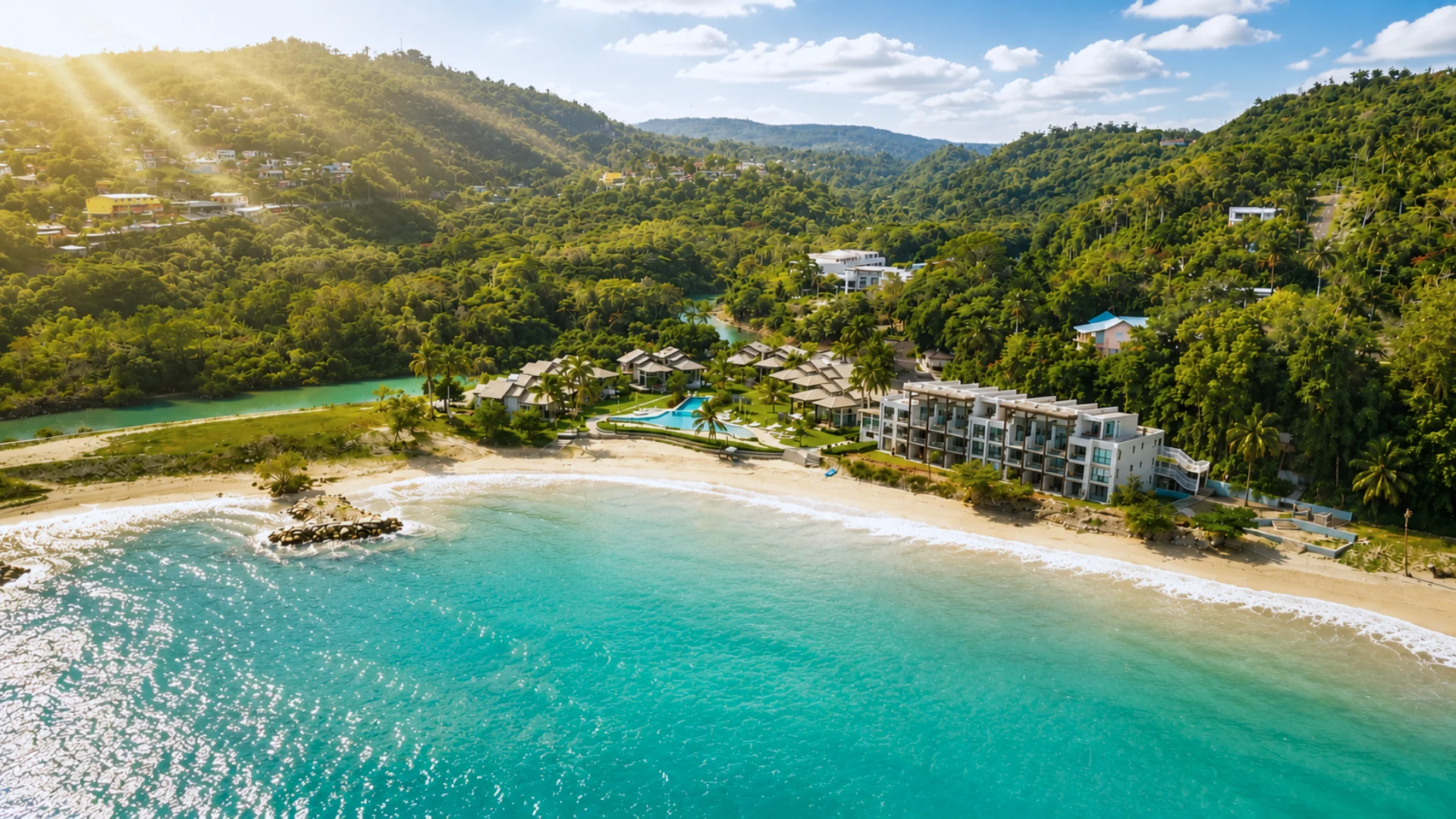
One of the most moving experiences on Jamaica’s north coast begins with a very small journey: a hatchling crossing the sand towards the sea. At Bessa, the coastline is more than a view. Seasonal nesting and hatching are part of the living shoreline around Gibraltar Beach.
A place to stay. A shore to care for.
Bessa’s developer, KLE Group, identifies turtle nesting grounds among the natural features of the ocean-and-riverfront community. A first-party description of Bessa provides that background. Local writer Adventures from Elle also documented a conservation-led hatchling event on Gibraltar Beach in 2025, connecting the beach with Bessa and the Oracabessa Bay Sea Turtle Project.
For guests whose visit coincides with activity, watching from an appropriate distance can be an extraordinary memory. The privilege is being present for a natural event while the people caring for the turtles decide what is appropriate. It is not a show that runs to the hotel calendar.
What happens during turtle season?
A return to the shore
Adult females come ashore to lay eggs in the sand. Give them space and leave the route between beach and sea clear.
Life beneath the sand
The nest remains a protected place while the eggs develop. A marked nest is a reason to take care around the area, not an invitation to investigate it.
The first journey
When hatchlings emerge, an ordinary stretch of beach becomes somewhere remarkable. Observation depends on the activity, access arrangements and conservation team’s instructions.
Nesting and hatching are different stages, so arriving during a broad nesting season does not mean a hatch will happen during your stay. Weather and natural timing also affect what can be witnessed. We do not promise a particular date, a release event or a turtle sighting with a reservation.
The 2025 Gibraltar Beach visitor account described August and September as useful months to enquire about hatchling activity. Treat that as historical context, not a confirmed timetable for your trip. Ask about the current season before choosing dates specifically for this experience.
How to plan a respectful visit
Contact Bessa’s guest team with your intended dates and say that turtle conservation is a particular interest. Ask whether a conservation-led observation is currently possible, how access is arranged, and whether registration or a contribution is required. Booking accommodation alone does not reserve a place at an event.
- Before you travel: ask about the current situation, including whether any visitor activity is being offered at all.
- Once onsite: check again with the team. A natural event may be confirmed at short notice, so leave some flexibility in your evenings.
- With children: explain that watching quietly is the experience. Ask about the setting, supervision and any age guidance before joining.
- For photography: ask the conservation leader what is permitted. Seeing the moment can matter more than recording it.
If nothing is happening during your visit, make the day about the coast itself: an unhurried morning, a river view, and a home from which to explore Oracabessa. A memorable stay should not depend on wildlife keeping an appointment.
Small choices that protect the beach
Jamaica’s National Environment and Planning Agency advises visitors not to touch turtles, disturb eggs or hatchlings, or interfere with nest markers. Keep the animal’s path clear; avoid flash photography and lights shining towards the beach. Leave any handling to the authorised conservation team. If you find a turtle or nest in distress, alert the onsite team and NEPA rather than attempting a rescue yourself.
Choose a quiet observation over a close-up encounter. Keep your group together under the leader’s direction, and leave the beach as you found it. The most valuable souvenir is a better understanding of the place you have visited.
Part of a wider Oracabessa story
Conservation in this area extends beyond a single property. The GoldenEye Foundation’s marine programmes describe work with local fishers, sanctuary wardens, coral restoration and turtle education. These are distinct organisations and programmes; a stay at Bessa should not be taken to include their tours or imply a formal partnership.
If you would like to learn more on the water, ask about a suitable, currently operating local guide and the conditions for your group. Choose an experience that explains the habitat as well as showing it. A conservation contribution should go through the organisation’s confirmed channel, with any cost understood in advance.
Build the rest of your stay around the coast
A studio can suit a smaller party; separate-bedroom suites, lofts and villas offer other ways to gather. Start with your group’s space and access needs, then compare the individual residence and the live Bessa availability. Neither a particular room nor an ocean view guarantees that turtles will be visible from it.
Use our Bessa building guide for arrival and accommodation choices. For days out, the Oracabessa and Ocho Rios guide starts close to home; the Jamaica travel guide helps you decide when a farther journey deserves its own overnight stop.
Questions before you book
Can we book a guaranteed turtle hatching?
No. Hatching is a natural event. Ask about current conservation-led opportunities, and choose a stay you will enjoy even if no observation is possible.
Is the experience included with Bessa accommodation?
Do not assume it is included. Access, registration, availability and any contribution need separate confirmation with the guest team and organiser.
Can we join if we are staying somewhere else?
Check directly with the event organiser about visitor access. Do not arrive at a private property or nesting area without the required arrangements.
Can we pick up or help a hatchling?
Observe and follow the authorised conservation leader’s instructions. Do not independently handle turtles, eggs or nests.
Continue your journey
Keep exploring Jamaica

Jamaica
Beyond Oracabessa: Plan Your Jamaica Journey
Build a Jamaica itinerary with Oracabessa as a considered starting point, balancing different regions, travel time and the experiences that matter to your group.

Jamaica
Bessa Studios, Suites, Lofts & Villas: How to Choose
Compare Bessa studios, suites, lofts and villas by sleeping arrangements, privacy, layout and the practical questions to confirm for your exact residence.


