


TRUE NORTH · NORTHERN MICHIGAN
Sleeping Bear Heritage Trail: Choose a Segment, Not the Whole Route
Plan a rewarding piece of the Heritage Trail using the actual segment, rather than its total length or a broad accessibility label.
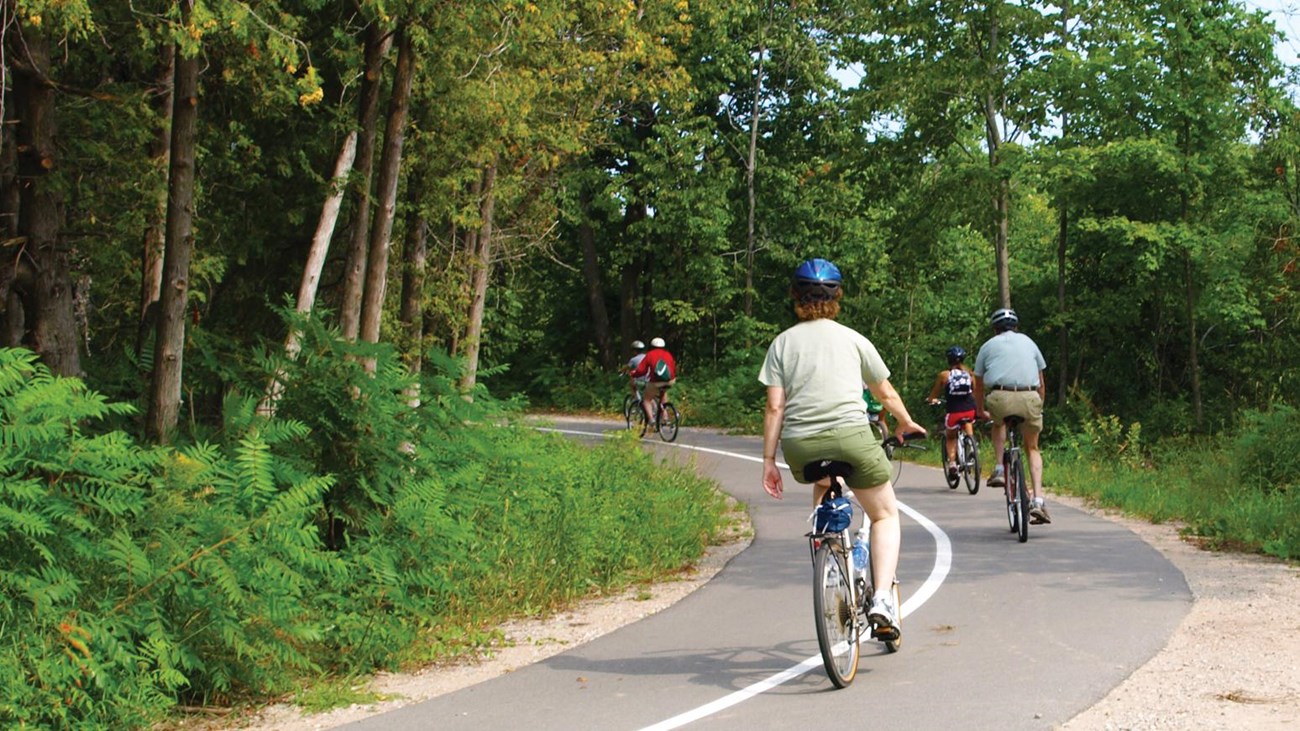
Explore our destinations and staysCyclists on the Sleeping Bear Heritage Trail. Photo: NPS. NPS image source.
The Sleeping Bear Heritage Trail is most useful when you treat it as a choice of outings. A short walk, a family ride and a longer cycling day can all use the trail differently. Start by selecting a segment and a turnaround that suit your people. You do not need to travel its full length to enjoy the lakeshore.
Read the surface and grade information
NPS describes the Heritage Trail as mostly paved, with packed gravel through the Port Oneida Rural Historic District. It also notes steep grades on some stretches. That combination matters: a broad accessible-trail description does not mean every part is flat, paved or equally suitable for a wheelchair, stroller or inexperienced cyclist.
Check the specific segment with the park or the trail's detailed resources. Explain the equipment and abilities involved. Ask about grades, surface changes, current works, restrooms and where you can turn around safely. If cycling, choose the return route before setting out; enthusiasm on the outward ride is not a reliable measure of energy for the way home.
Build the outing backwards from the return
| Decision | Write down | Why |
|---|---|---|
| Start | A named trailhead and legal parking. | You need a clear place to leave and find the vehicle. |
| Segment | Surfaces and grades the group can manage. | Distance alone does not measure effort. |
| Turnaround | A landmark and a time to reassess. | The return remains part of the outing. |
| Backup | A shorter option if conditions or energy change. | You can adjust without improvising a new trip. |
An out-and-back route can be simpler than arranging a shuttle, provided everyone understands it includes the return distance. A one-way plan needs confirmed transport and a realistic equipment arrangement. If renting bicycles, ask the outfitter about fit, helmets, child equipment, e-bike policies and assistance if something goes wrong.
Share the trail well
The trail is used by people moving at different speeds. NPS asks users to keep right, announce passing, move off the trail when stopping and ride at a safe pace. A family break should not block another person's route. Keep young riders close enough to guide them at crossings and when other users pass.
Pets have seasonal restrictions; NPS says they are not allowed on the Heritage Trail from December 1 through March 31. Check the current park pet guidance for the trip date rather than assuming summer rules apply in winter. Confirm your booked home's pet policy separately.
Make a meal part of the plan, not a rescue
Carry drinking water and food suitable for the duration. If your route depends on a business being open, confirm it before leaving. Keep enough in the bag for a delay, and leave the trail and stopping places as you found them. An early turnaround with an enjoyable picnic is a complete outing.
Use our Glen Arbor and Glen Haven plan when pairing a short segment with village time. For a party with different abilities, the mixed-energy guide helps choose the shared part of the day. Our Empire starting-point guide explains how to get specific park advice.
Choose a stay around the days you will repeat
Explore The Birches of Lake Leelanau and the wider Northern Michigan collection. Verify each home's actual address and bicycle-storage arrangements before booking. A good trail day starts with a manageable segment and ends with enough energy to enjoy being home.
Trail guidance reviewed October 14, 2026. Confirm current surface, grade, pet and access information for the selected segment.
Continue your journey
Keep exploring the area
Traverse City & Northern Michigan
A quiet weekday in Northern Michigan: choose the opening window first
Check Northern Michigan weekday hours, dated closures and access before choosing one anchor. Use the opening comparison and practical planning worksheet.

Traverse City & Northern Michigan
Planning a Traverse City Horse-Show Stay
A useful checklist for dates, travel to Flintfields, sleeping arrangements and the details that make the stay work.

Traverse City & Northern Michigan
Bayshore Marathon: Where to Stay on Race Weekend
The 2025 Bayshore Marathon takes place on Saturday, May 24th, keeping with its Memorial Day Weekend tradition. Hosted by the Traverse City Track Club, the event continues to…


